Make Camp Small
A river camp should solve shelter, food, rest, and sanitation while leaving as little trace as possible. The most effective approach is not a long set of heroic cleanup tasks. It is a compact system that avoids creating the damage in the first place.
Use designated or durable places
Follow the current segment rules and campsite requirements in the official camping information. Within an appropriate site, concentrate tents and repeated foot traffic on durable ground rather than expanding into vegetation. Keep boats secure without blocking the shoreline or creating tripping lines across shared access.
Organize before opening everything
Choose zones for sleeping, kitchen work, sanitation equipment, and secured boats. Remove only the containers needed for the next task. A complete gear explosion makes small items easy to lose, spreads impact, and delays departure. Shared labels and a consistent container order reduce searching.
Keep the kitchen contained
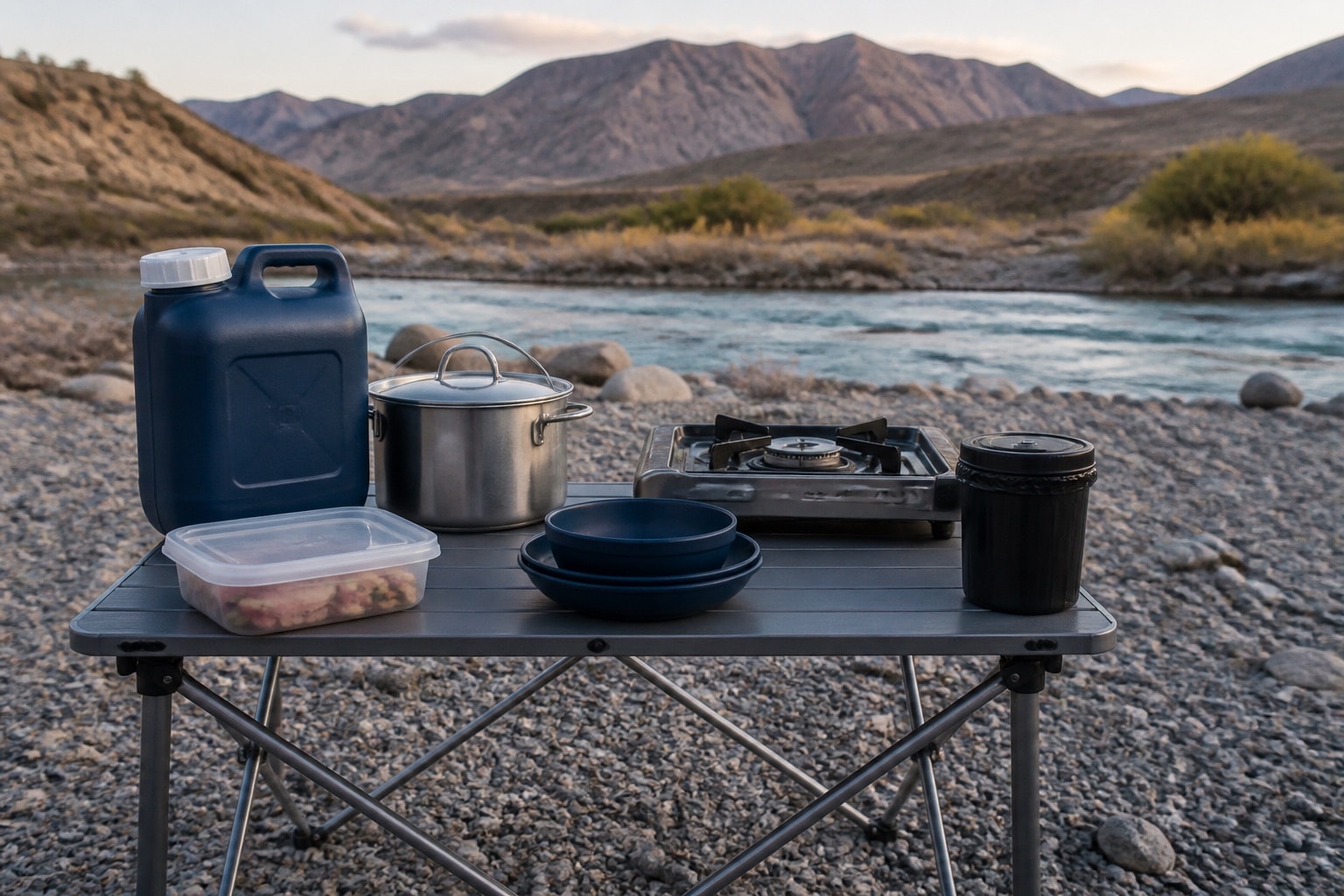
Prepare food on a stable surface, protect the ground from spills, and catch scraps during preparation. Plan portions to reduce leftovers. Store food and scented items securely, keep them away from sleeping areas as appropriate, and never leave waste available to wildlife. Every scrap, wipe, and wrapper should have a defined return container.
Follow current fire restrictions
River-corridor fire rules can be seasonal and specific. The current know-before-you-go guidance is the authority for the planned dates. A metal fire pan or familiar routine does not override a restriction. Build meals and warmth around a plan that remains safe without an open fire.
Make sanitation immediately usable
If a pack-out system is required, it should be accessible soon after arrival, stable, private without damaging vegetation, and compatible with the approved disposal method. Explain the system without embarrassment and before urgency. Store used components in secure, leak-resistant containment separate from food and drinking-water equipment.
Protect the night environment
Use only the light needed for tasks and point it downward. Keep voices and audio low; canyon walls carry sound. Secure lightweight objects before evening wind. Inspect the area for wildlife movement and avoid placing a sleeping area across a natural route or too close to the water’s changing edge.
Leave in layers
Begin with personal items, then shared sleep equipment, kitchen gear, sanitation equipment, and finally the boat-security system. After loading, conduct two inspections. The first looks for microtrash, food, cord, and stakes. The second asks whether rocks, vegetation, soil, and the shoreline were unnecessarily altered. Naturalize only small, accidental disturbance; do not disguise significant damage—report it through the appropriate public channel if needed.
Practice corridor courtesy
A campsite is part of a shared travel route. Avoid occupying more shore than needed, keep approaches clear, and do not treat empty neighboring space as storage. If another group is present, preserve distance and privacy. Courtesy also includes a timely departure so a site does not become a private base camp beyond the permitted plan.
Carry the lesson forward
At the final take-out, separate trash from reusable equipment and note which packaging or meal choices created unnecessary waste. Improve the next packing list rather than repeating the same cleanup burden. Low-impact camping becomes reliable when it is designed into menus, containers, timing, and group roles.
See overnight river systems for load and contingency planning, and river stewardship for broader corridor practices.