One Number Is Not a River
River conditions are often reduced to a discharge value, but a gauge reports only part of the scene. A useful interpretation combines measured flow, gauge height, water temperature, weather, wind, recent changes, visibility, access, debris, and the group’s experience. No single number can declare a reach safe.
Read the station before the value
Open the public Deschutes station page and first identify the station name, location, measurement time, units, and provisional-data notice. A reading from one location may not represent the exact reach being considered. Tributaries, dams, diversions, distance, and travel time all matter. Treat the gauge as observed context, not a remote control panel for the entire river.
Discharge and gauge height answer different questions
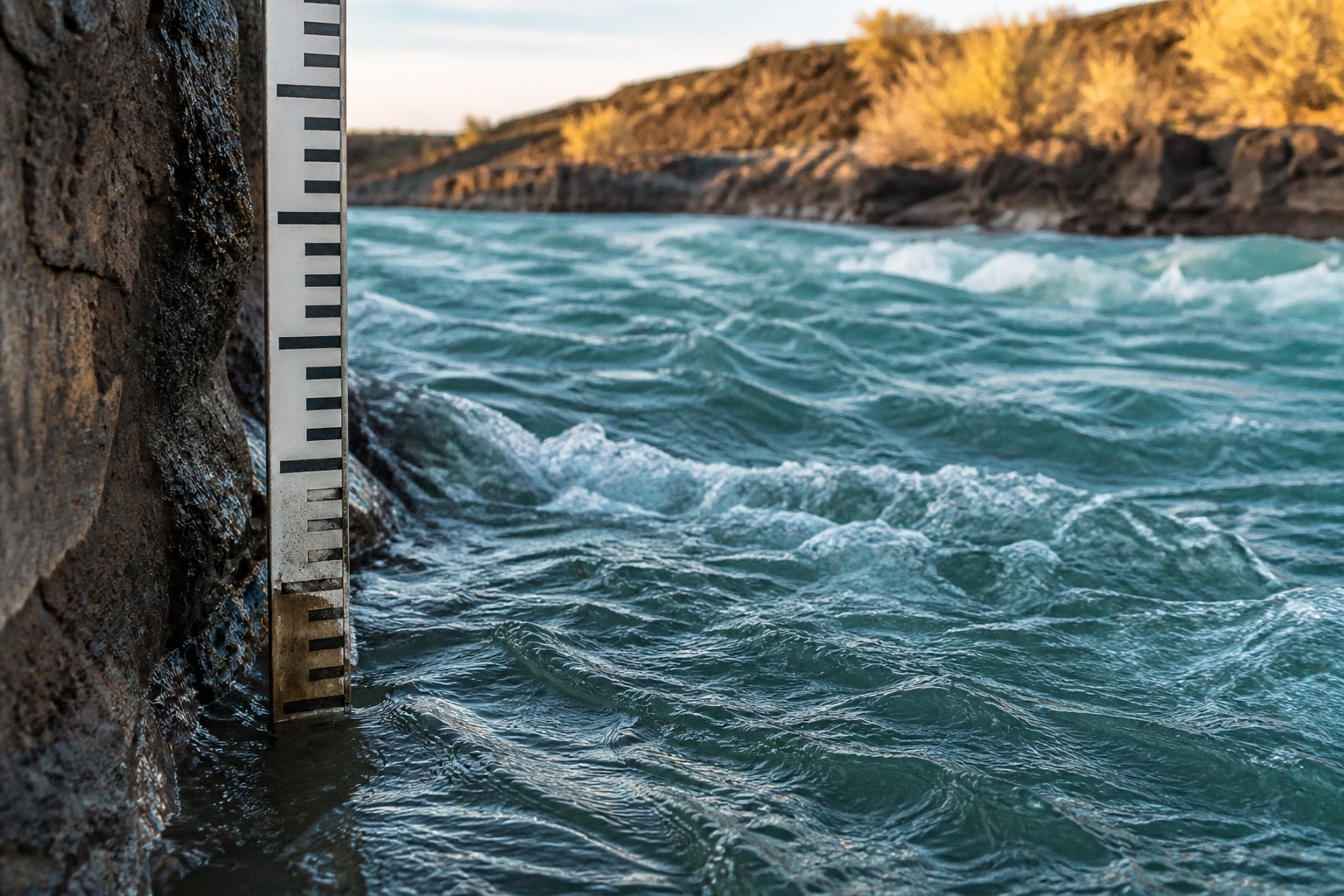
Discharge estimates the volume of water passing a section over time. Gauge height describes the water-surface elevation relative to the station’s reference. Both can change the way features form, but neither translates automatically into a difficulty rating. The same numeric change may affect different channels and rapids in different ways. Local, current knowledge is required to understand what a reading means on a particular reach.
Trend can matter more than a snapshot
A single point hides direction. Look at recent values and ask whether the river is stable, rising, or falling, and how quickly. Then check when the last data point was recorded. An old tab, cached graph, or screenshot can create false confidence. If the station is not reporting normally, mark the observation as unavailable rather than filling the gap with assumption.
Water temperature changes consequence
Warm air does not make immersion trivial. Water temperature influences cold shock, dexterity, and the clothing needed for exposure. Wind after a swim can accelerate cooling. Choose layers for the water and the recovery situation, including how long a person might remain wet before reaching dry clothing and shelter.
Wind changes pace and control
Canyon wind can arrive as a headwind, crosswind, or gust around a bend. It may slow a lightly powered craft, separate boats, make ferry angles harder, and turn a planned arrival into a late one. Check the forecast for the route, not merely the departure city, and preserve time margin. If the day depends on maintaining an optimistic speed, the plan is brittle.
Heat, smoke, and fire affect the whole system
Heat increases water needs and can degrade concentration. Smoke affects visibility and exertion. Fire activity can change road access or public-land restrictions. These are not separate from river safety: they influence judgment, rescue options, and the feasibility of reaching or leaving the water. Check current public notices close to departure.
Use a conditions worksheet
- Observed: station, time, discharge, gauge height, water temperature, trend.
- Forecast: air temperature, wind direction and speed, precipitation, lightning potential.
- Public notices: access, closures, fire restrictions, pass conditions.
- Local observations: visibility, debris, shoreline changes, crowding, and the condition of the take-out.
- Group response: clothing, water reserve, pace, route choice, alternate plan, no-go threshold.
Turn information into a decision
The question is not “Is this level good?” It is “Do these combined conditions fit this exact route, craft, group, and plan—with margin?” If the answer relies on guessing what a number means, seek current qualified knowledge or choose a simpler alternative. Review the planning sequence to place conditions alongside access, timing, and group ability.
Record the decision, not only the number
When checking observations, note the timestamp, units, trend, weather context, and the choice the group made. This prevents a remembered gauge value from becoming a false universal threshold. On a later trip, the note shows which assumptions were specific to that reach, season, craft, and group. Treat the record as context for renewed judgment, never as automatic permission to launch.