Moving-Water Safety Primer
River safety is not a promise that nothing will go wrong. It is a set of habits that reduces avoidable exposure, makes problems easier to recognize, and gives a group more options when conditions change. This page is general education, not training and not a judgment that any route is appropriate. Swift-water skills require hands-on instruction and practice in a suitable environment.
Wear the right life jacket correctly
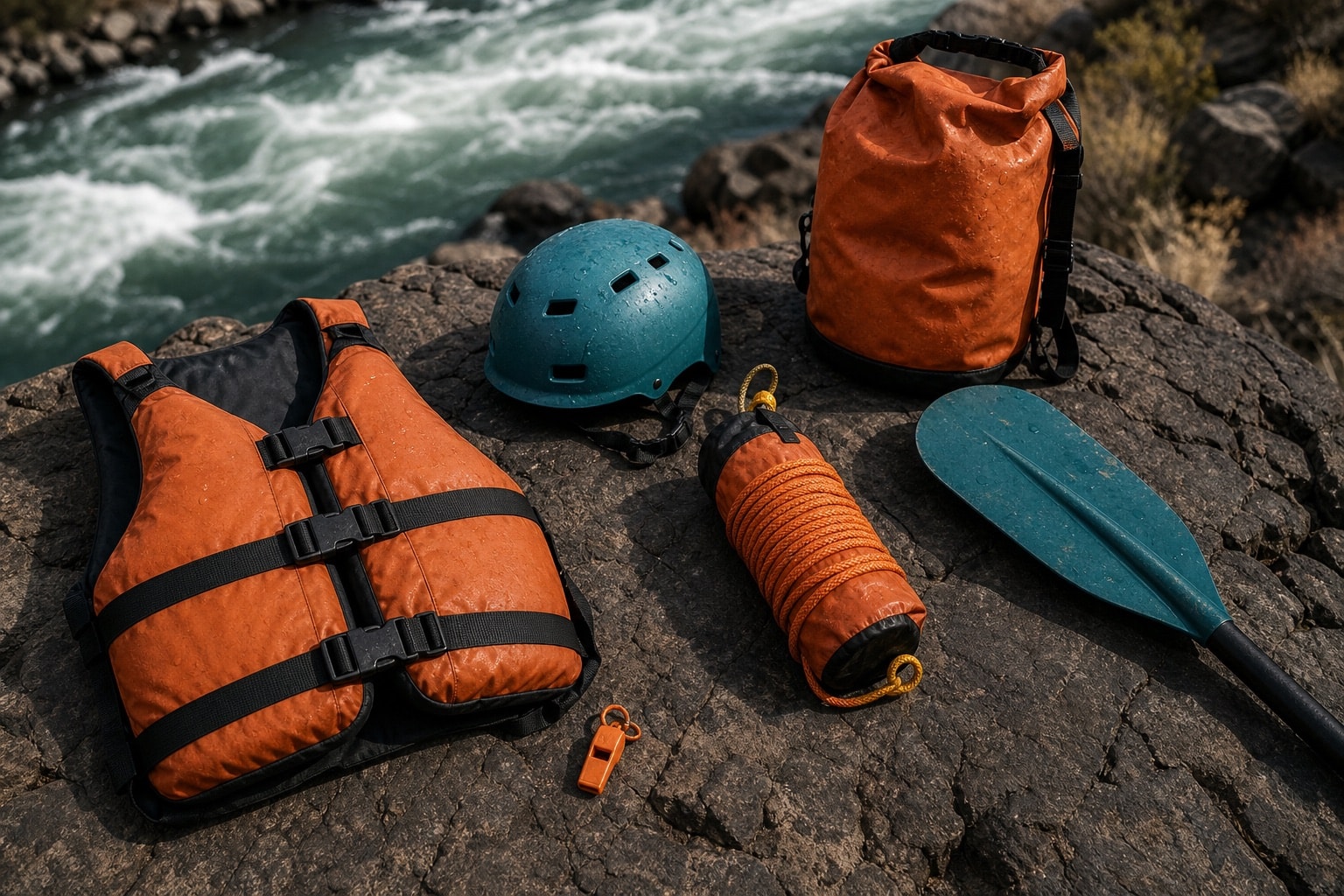
A life jacket only helps when it is approved for the activity, fits the wearer, is fully fastened, and stays on. Check the label, size range, condition, and intended use. Tighten straps in a consistent order and perform a lift test so the jacket does not rise over the face. The state’s current life-jacket guide explains fit and activity categories. Whitewater requirements are more specific than casual flat-water assumptions, so verify the current rule for the trip.
Dress for water, not just air
A hot canyon afternoon can hide the effect of cold water. Sudden immersion changes breathing and coordination before a person has time to reason through the situation. Clothing should be chosen for water temperature, likely exposure, wind, and the time required to reach warmth. Cotton holds water and can become a liability; secure layers and a dry change belong in a genuinely waterproof container. The group should discuss cold-water response before launching, not for the first time after someone swims.
Learn the hazard vocabulary
A strainer allows water through while blocking a person or boat. A foot entrapment can occur when a swimmer tries to stand in strong current and a foot catches while water pushes the body downstream. A wrap pins a craft against an obstacle. A hydraulic recirculates water behind a feature. Knowing the terms matters because each hazard changes the correct response. The state’s swift-water overview is a useful introduction, but recognition is best learned with qualified instruction.
Agree on communication
Water, wind, helmets, and distance make ordinary conversation unreliable. Before moving, agree on a small command set and basic paddle or hand signals. Everyone should know who makes the final call, what “stop” means, how to point at a hazard without losing balance, and how the group will regroup after a rapid. Commands should be short, practiced, and consistent across boats.
If a person enters the water
The correct response depends on the feature and training. A common defensive swimming posture keeps the person on the back with feet downstream and near the surface, while an aggressive swim may be needed to reach a safe eddy. Never stand in strong current where a foot can trap. Keep feet up until the water is shallow and controlled. A throw bag can help only when the thrower has practiced its use, has stable footing, and manages the rope so it does not create a new entanglement hazard.
Keep space for errors
Margin is the difference between the group’s maximum ability and what the route demands. Preserve it by choosing a conservative reach, starting early, keeping boats in communication range, scouting uncertain features from a safe place, and declining conditions that compress options. Fatigue, heat, hurry, and social pressure all spend margin even when the water has not changed.
Use a no-go checklist
- The route or take-out is uncertain.
- A participant lacks a correctly fitted life jacket.
- The group cannot explain the major hazards.
- Required equipment is damaged or missing.
- Weather, smoke, fire, access, or observed conditions fall outside the plan.
- The person expected to lead is not comfortable with the decision.
Any one of these is enough to pause. Continue with the equipment systems checklist and route-planning sequence, then confirm current rules through the responsible public source.
Separate response by time and urgency
An immediate river emergency is about scene safety, the group’s practiced rescue plan, accountability, communication, and timely contact with emergency services when available. Do not delay an urgent response to debate a diagnosis or search a general reference page. Once people are out of current, watch for unstable footing, heat, cold, wind, and moving equipment. Actions must stay within the responder’s training and the equipment at hand.
On-river first aid has a narrower purpose: address immediate needs within training, protect the person from further exposure, and support the handoff or evacuation decision already built into the float plan. Note what happened, when it happened, and meaningful changes that can be passed to a responder. First-aid supplies and a communication device are useful only if they remain reachable after a swim, upset, or damaged load.
Later, non-emergency follow-up is a separate lane. Pain, swelling, weakness, limited motion, numbness, or symptoms that persist after the trip deserve appropriate medical attention rather than another river test. A licensed clinician can assess an individual concern; the general sports-injury overview provides background reading, not a river diagnosis. Record the incident and examine fit, load, technique, pace, rest, and the point at which the plan should have changed. That review can improve the next planning threshold without turning a field checklist into medical care.