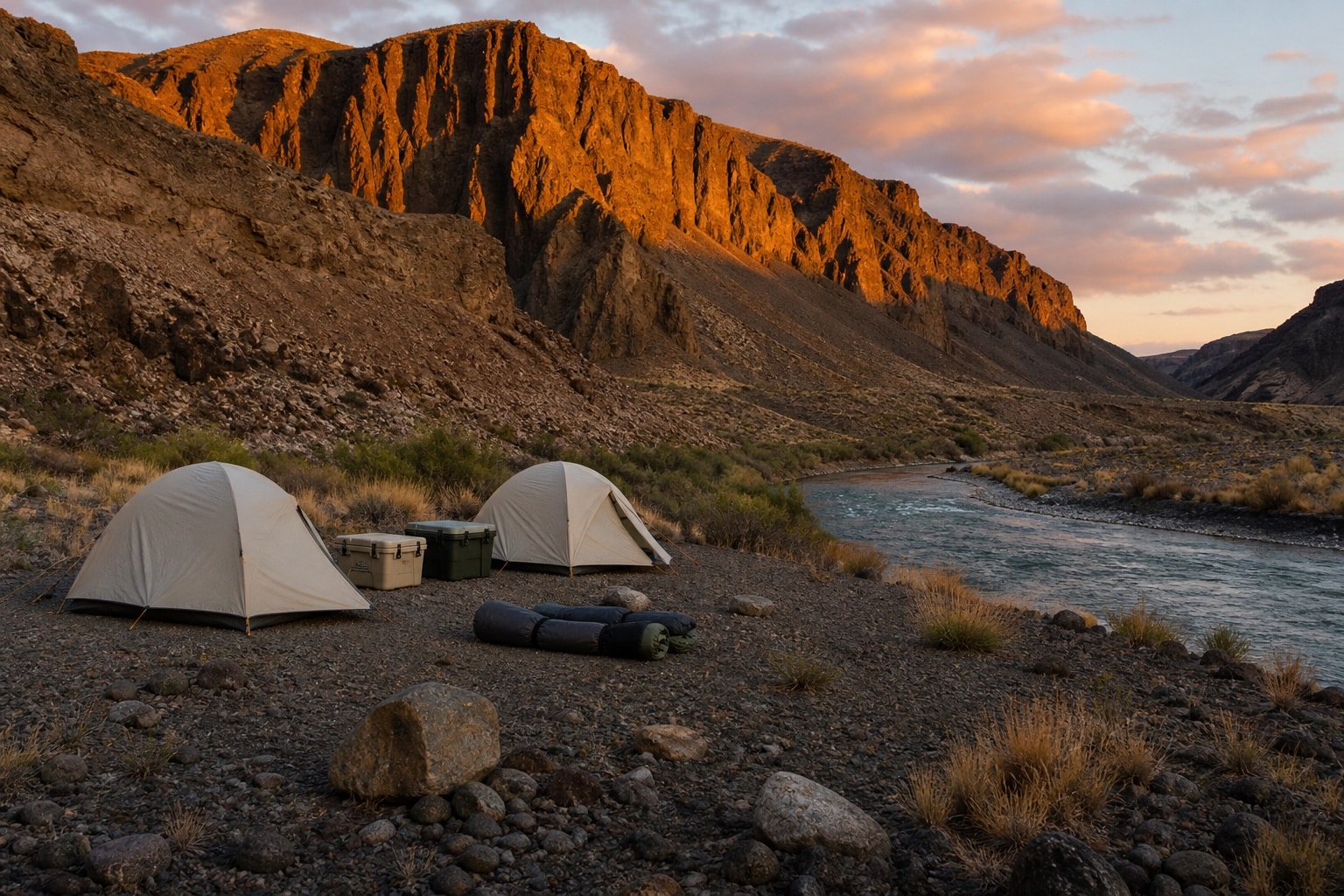
Overnight River Systems
An overnight journey is not simply a day trip with a tent. Extra weight changes boat handling; camp choices affect timing; food and sanitation create new responsibilities; and a small delay can carry into the following day. The plan works best when these pieces are treated as linked systems.
Match the route to loaded handling
A craft that feels responsive when empty may turn slowly, sit lower, and need more room when loaded. Distribute weight according to the craft’s design, secure every item, and keep emergency equipment accessible. Practice with a representative load in suitable water before committing to a remote route. Load confidence gained in a parking area is not the same as handling experience.
Plan the segment and camp together
Do not select a campsite as an afterthought at the end of an ambitious mileage target. Review the official segment and camping information, understand where camping is permitted, and plan at least one alternative. River pace, occupancy, wind, heat, and access can make the preferred site impractical.
Build a dry system with layers
Organize gear by consequence. Sleep insulation and warm clothing need a more robust dry system than items that tolerate moisture. Use internal waterproofing where failure would matter, then secure outer containers against movement and abrasion. Label containers by function rather than owner so any participant can locate shelter, food, repair, or first-aid supplies.
Treat drinking water as a route decision
Estimate need for heat, exertion, duration, cooking, and reserve. Decide what is carried, what treatment method is available, and what happens if a container leaks or is lost. Spread capacity rather than creating a single point of failure. Protect treatment equipment from silt and make sure more than one person understands it.
Keep food simple and contained
Choose meals that fit the expected temperature, stove restrictions, preparation time, cleanup, and waste plan. Pack by day or meal to reduce searching. Secure odors and scraps, contain gray water according to current rules, and plan for every wrapper to leave with the group. Food systems should reduce wildlife attraction and time spent reorganizing at camp.
Sanitation is required planning
Overnight use may require an approved human-waste pack-out system. Verify the current requirement on the official trip-rules page. The system must be available when needed, compatible with the required disposal method, stable during transport, and understood by the group. Privacy does not excuse poor containment or site damage.
Fire rules shape the kitchen
Seasonal restrictions may prohibit open flame categories while allowing only specified manufactured stoves or lanterns. Check the current rule and build a food plan that still works if conditions tighten. Never rely on collecting river-corridor wood. Heat, wind, and dry vegetation make a casual campfire decision consequential far beyond one campsite.
Protect morning margin
Pack critical boat gear the night before in an order that supports a clean launch. The morning routine should include weather and condition checks, breakfast, water allocation, camp inspection, loading, fit checks, and a renewed go/no-go decision. A late start can compress the hardest part of the day into peak heat or afternoon wind.
Carry layered alternatives
Identify a shorter day, an alternate legal camp, extra food and water, a weather delay strategy, and the response to damaged essential equipment. Each alternative has limits; describe them in advance. Remote travel rewards humility because assistance may be delayed and communication may be unreliable.
Use the low-impact camp page for site routines and the stewardship page for corridor-wide practices.
Protect tomorrow’s capacity
An overnight system should leave enough energy, water, dry clothing, food, and daylight for the following day’s work. Review the next reach before camp tasks scatter attention. Identify the morning sequence, the weather check, and the item most likely to delay departure. A calm evening reset keeps small disorder from compounding into a rushed launch with a heavily loaded craft.
Schedule recovery and recheck the exit
Rest is part of the operating plan, not whatever time remains after camp chores. A multi-day route repeats lifting, boat control, sun exposure, concentration, loading, and shoreline movement while the craft remains heavy. Set a conservative camp-arrival window that leaves time to eat, drink, change layers, organize equipment, and sleep without rushing. Rotate demanding tasks before one person carries yesterday’s fatigue into every launch and landing.
Use the evening reset to compare the next day’s work with demonstrated capacity. Ask whether grip, balance, mobility, attention, and communication remained steady through the day; then consider the coming load, wind, heat, and access. Ordinary tiredness may improve with food, water, and rest, but the plan should not assume that every limitation will disappear by morning. Shorten the next segment when the available recovery window or the group’s observed condition no longer supports the original schedule.
Recheck the exit plan before attention shifts to camp. Confirm the intended public take-out, its approach landmarks, the shuttle sequence, the expected contact time, and what the person holding the float plan should do if the group is overdue. Identify any earlier legal exit and the decision point for using it. In the morning, repeat the check against current conditions and the group’s condition. If an essential role cannot be covered reliably, equipment cannot be secured, or the timing margin has disappeared, use the planned shorter option while a controlled exit remains available.